Strategy, experience design, production capacity, and a working rhythm tied to the business need.
When changed work requires new skills and support
Prepare people to perform
the work your strategy requires.
When work, roles, and processes change, people need more than a rollout. SDI adds the L&D specialists your team needs across strategy, design, delivery, reinforcement, and measurement without requiring you to build every role in-house.
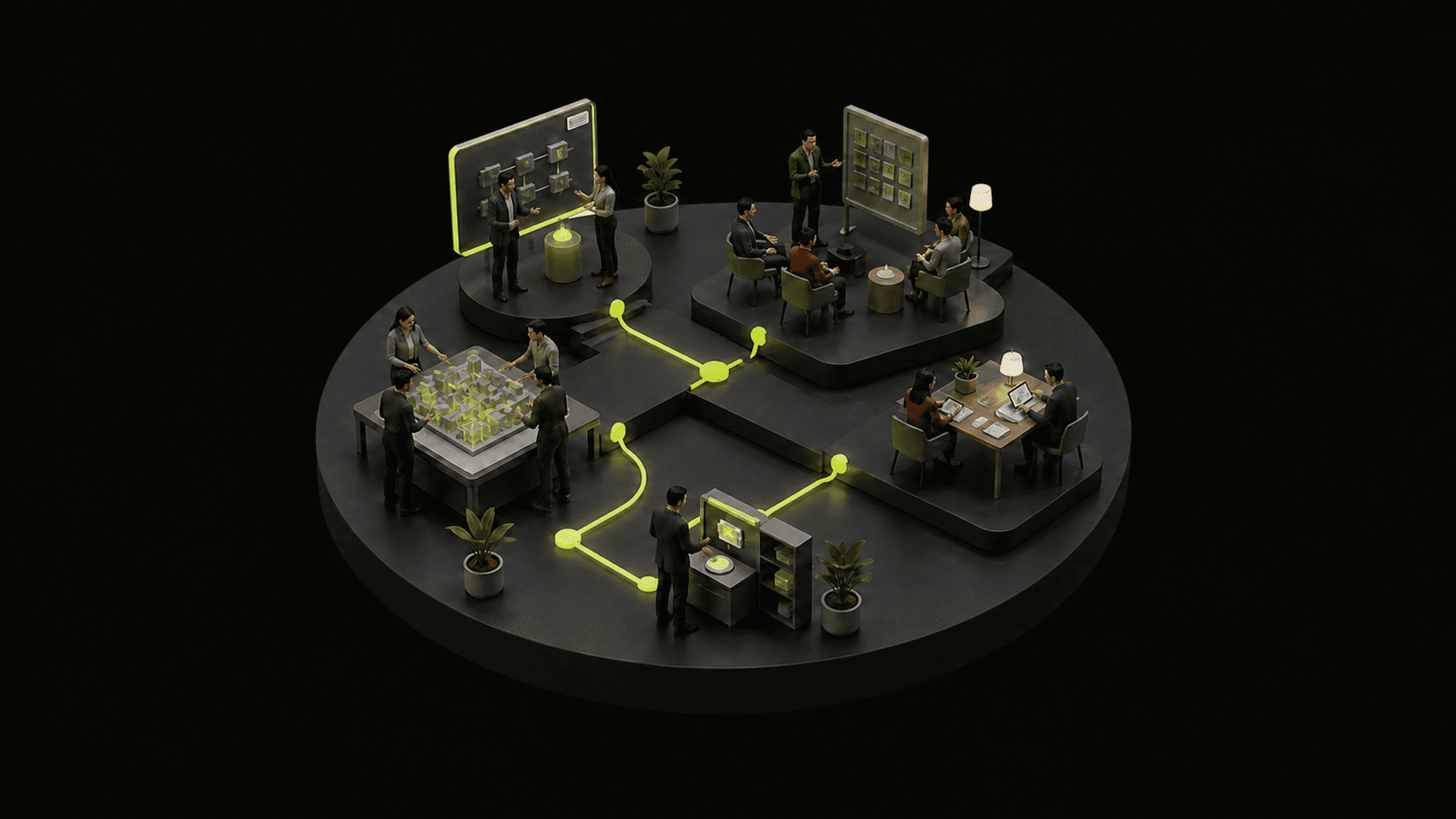
Illustrative SDI method
Connect changed work to practice, reinforcement, and evidence of adoption.
Define performance
Build practice
Measure adoption
BUILD THE RIGHT L&D SUPPORT
Name what is holding the work back.
See the partnership take shape.
This is not a staffing menu. Choose what is holding your team back to see what help is needed, what your team owns, and the first thing we would build together.

WHAT NEEDS TO MOVE?
BUYER PRESSURELearning work is busy, but priorities are not clear.
HOW WE WORK TOGETHER
Learning strategy and portfolio priorities
Business context, culture, priorities, standards, and final choices.
THE FIRST DELIVERABLE
A learning brief
the performance need, audience, priorities, owner, and first decision.
How learning connects to performance
Do not outsource a course catalog. Build what people need to perform.
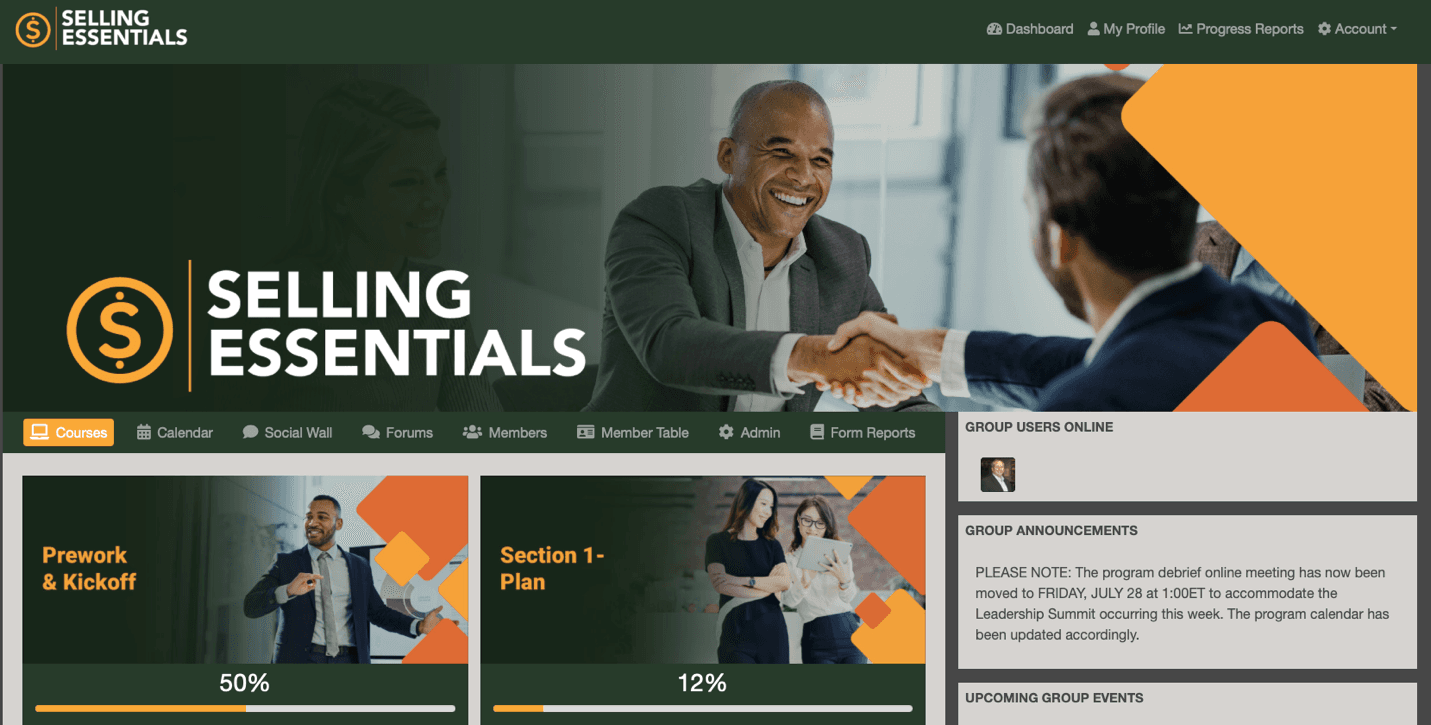
See how SDI connects a business need to a learning program, realistic practice, and support on the job. These client examples show what we built and how the pieces work together, so you can judge whether the approach fits your team.
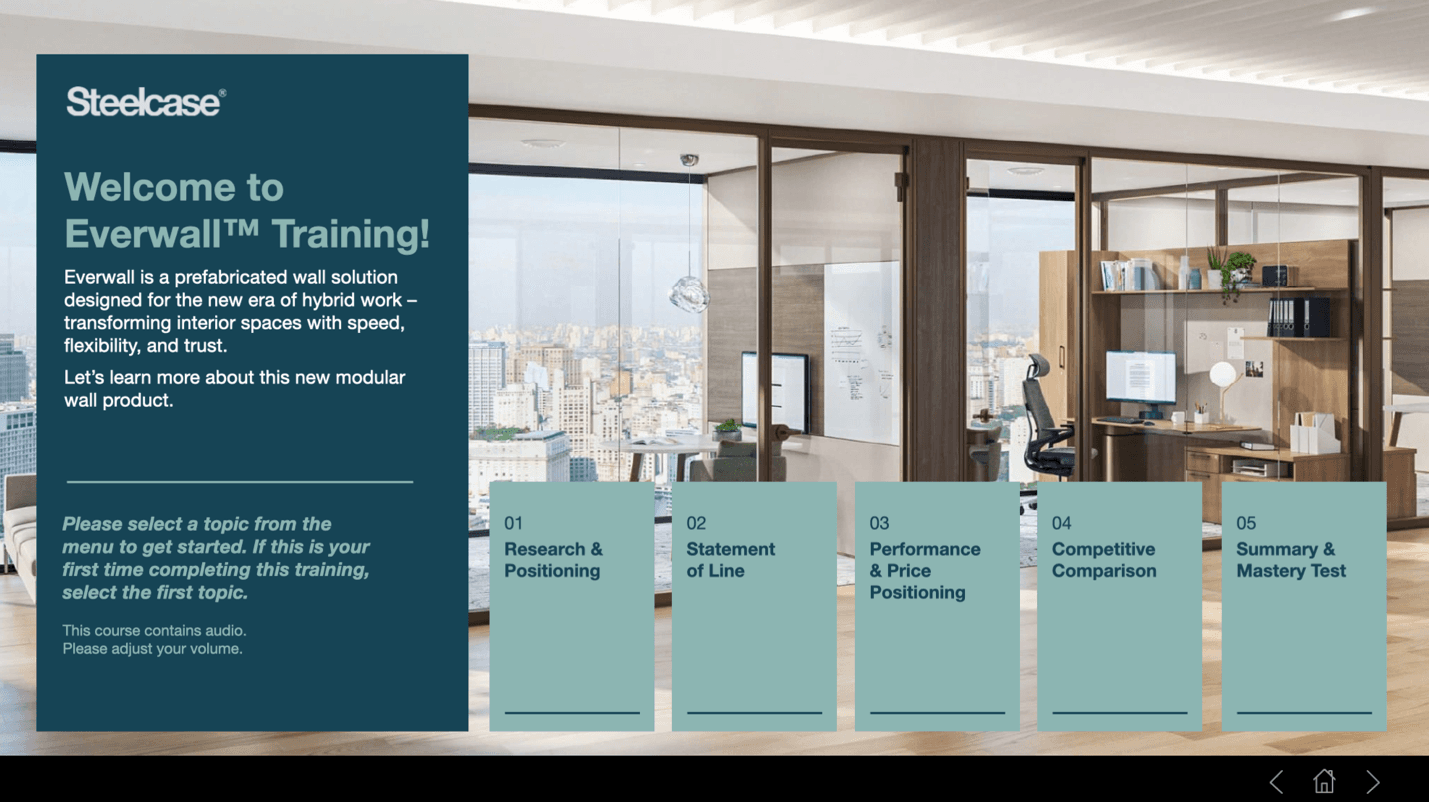
Buyer question
Can leaders see how people will move from understanding to confident performance, not just complete a list of courses?
What the artifact proves
The pathway shows how foundational understanding, practice, reinforcement, and the performance objective work together.
Selected client-approved delivery excerpts demonstrate how SDI designs and implements connected learning. They are not presented as a customer-results claim.
Where is your team stretched today?
Choose the challenge closest to yours.
Click on any challenges that resonate with you
Where L&D breaks down
Why can learning activity fail to change performance?
- 01
Activity without architecture
Programs accumulate, but leaders cannot see which role, behavior, or operating priority they are meant to change.
Question to answerWorkload: Which learning work is repeatedly delayed, improvised, or left with no owner?
- 02
Content without practice
People complete material without rehearsing the decision or action the work actually requires.
Question to answerPerformance: Where do people need more practice, guidance, or reinforcement to perform?
- 03
Completion without evidence
The dashboard reports attendance while the business still cannot tell whether the work is being performed differently.
Question to answerEvidence: What would show leaders the investment is changing work, not just completion?
What leaders should look for
The test is not whether a program exists. It is whether people can perform the new behavior with confidence and leaders can see proof that it is working.
Illustrative performance system
Connect learning to the moment performance must change.
A course is one component. Reliable performance requires a route through practice, point-of-work support, reinforcement, and observable evidence.The performance route begins by defining the changed work, moves through realistic practice and point-of-work support, includes manager reinforcement, and ends with observable performance evidence. Feedback from evidence returns to the learning system so it can improve.
One accountable L&D partner
What does full-service outsourced L&D include?
Six specialties work together. The value is not access to more vendors; it is one team carrying the thread from the business need to observable performance.
The scope names which roles SDI supplies, which decisions remain with your team, how work is approved, and what evidence leaders will review.
01
Strategy & Planning
We assess talent gaps, define learning objectives aligned to business goals, and create a prioritized roadmap with explicit owners and decisions.
02
Curriculum Design
Custom programs shaped around your organization, the work, and the audience instead of lightly branded off-the-shelf content.
03
Content Development
eLearning, workshops, facilitator guides, and job aids selected for the decision, task, or behavior they need to support.
04
Delivery & Facilitation
Facilitation for leadership retreats, sales kickoffs, and skill-building sessions, with practice and feedback built around the work people need to perform.
05
Measurement & Optimization
A measurement plan that looks beyond completion rates to the observable behavior or business signal that matters.
06
Ongoing Partnership
Fixed cost, flexible support. Scale up for major initiatives, then maintain what the business needs the rest of the year.
Where the learning goes to work
Choose what people need to do before choosing the format.
The same connected approach can support different priorities. What we build changes with the role, the moment that matters, and what leaders need to see.
USE CASE / 01
Role-specific onboarding for useful performance
Help people understand the organization, learn their role, practice the consequential moments, and reach useful performance sooner.
Role ClarityPracticeTime to Performance
USE CASE / 02
Leadership Development Pipeline
Build shared manager and leadership practices from first-time managers through senior leaders, with application between learning events.
Executive LeadershipFirst-Time ManagersTeam Leadership
USE CASE / 03
Sales & Customer Excellence
Prepare customer-facing teams for the decisions, conversations, and product knowledge their work requires.
Consultative SellingCustomer ExperienceAccount Management
USE CASE / 04
Technical Skills & Product Knowledge
Keep your teams current on systems, processes, and product updates without pulling them offline for weeks.
Software TrainingProcess UpdatesCertification Prep
USE CASE / 05
Change Management Training
Connect new systems and processes to role-specific practice, communication, job support, and reinforcement after launch.
System ImplementationsProcess ChangeCultural Transformation
Build an L&D case leaders can evaluate.
Role
The critical roles, decisions, tasks, and skill gaps in scope
Baseline
The operating data and assumptions leadership agrees are relevant
Signal
The observable behavior or business measure that would show progress
Illustrative scenario, not a forecast
SDI works with your leaders to define the relevant assumptions, workforce data, and performance outcomes before sizing an opportunity. That turns a generalized L&D conversation into a decision leaders can defend.
Discuss the value caseIs This Right for Your Organization?
Typically 500–2,500 employees, or an enterprise team with a clearly focused need
L&D team lacks one or more specialties: learning technology, instructional design, strategy, asset development, eLearning, motion graphics, workshop development, or facilitation
A small internal team is consumed by coordination and cannot cover strategy, design, production, facilitation, and measurement alone
HR leaders need specialist support for a priority without adding every role permanently
Executives need a clearer connection between learning investment and the work it should improve
Organizations need role-specific onboarding that helps people reach useful performance sooner
Organizations implementing new systems need practical learning and adoption support
You need people ready for the work you are changing.
You do not have to build every specialty before you can move.
SDI connects the decision to the work people will actually do.
Start with the work
Which work should agents handle, and which human strengths should you build?
Before investing in talent development, understand which repeatable tasks may be appropriate for agents and which human judgments and skills become more important. The assessment makes that boundary clear, so L&D investment follows the work that remains human.
How Does the Outsourced L&D Partnership Work?
- 01
Weeks 1–2 / Understand the demand
Review what is working, what is not, and where the gaps are through stakeholder interviews, available data, and a focused talent-needs analysis.
- 02
Weeks 3–4 / Set the priorities
Agree on a talent-development plan tied to business priorities, with clear recommendations and visible assumptions.
- 03
Ongoing / Deliver and adapt
Design, develop, and deliver the agreed work. Regular reviews track progress and adjust the plan as priorities change.
What Does Outsourced L&D Cost?
No massive upfront investment
A clear, manageable path to get started
Direct access to the people doing the work
Flexible support for major initiatives
Cancel anytime with 60 days notice
Strategy through measurement
One L&D partner, scoped to the work in front of you
Compare the investment against the specialist skills, vendor coordination, rework, delay, and internal management load it replaces, not against a generic salary benchmark.
Decision questions
Outsourced L&D FAQ
Common questions about our talent development partnership
01What is outsourced learning and development?
Outsourced learning and development means bringing in an outside team to handle agreed parts of your employee learning programs. SDI can help with planning, instructional design, content development, facilitation, and measurement. You can add the specialties your internal team needs or get broader support without hiring every role in-house.
02How quickly can you get started?
We start by discussing your most pressing need, deadlines, existing materials, and who needs to be involved. Together we agree on the first deliverable and a realistic schedule. Timing depends on the scope and how quickly your team can provide input and review the work.
03What does the monthly investment include?
The engagement can combine learning strategy, curriculum and experience design, content production, facilitation, program management, reinforcement, and measurement. The exact team, cadence, and investment are scoped to the changed work and the capability your organization needs rather than a one-size-fits-all package.
04Can small and mid-sized companies afford outsourced L&D?
It can be a strong fit when the organization needs several L&D specialties but cannot justify building every capability internally. The responsible comparison includes current staff capacity, vendor spend, platform and content costs, management load, rework, and the business cost of delayed initiatives. SDI sizes the operating model against that real baseline.
05Is outsourced L&D a subscription or a one-time project?
Our outsourced L&D service is an ongoing partnership with agreed priorities and regular reviews. It gives your team support across multiple programs as needs change. If you only need one course, workshop, or other defined deliverable, a separate project may be a better fit. We can help you decide which makes sense.
06We already have L&D staff. Why would we outsource?
Internal L&D often holds the context, relationships, standards, and priorities that an external team cannot replace. SDI can add strategy, experience design, production, facilitation, or measurement capacity around that team. Discovery makes ownership and decision rights explicit so the partnership strengthens internal capability instead of creating dependency.
07We've used training vendors before and the content was generic. How are you different?
SDI begins with the specific decision, task, or behavior that needs to change, along with the audience, language, constraints, and evidence of success. The response may combine live practice, custom digital learning, manager reinforcement, job support, or communications. The portfolio lets buyers inspect released work and independently judged recognition rather than relying on a claim that the content is different.
08How do I justify this investment to my CFO?
Start with what you already spend across internal capacity, vendors, platforms, content licensing, rework, and delayed initiatives. Then compare that operating picture with a partnership that covers strategy, design, development, delivery, and measurement. The decision should be based on total capability and management load, not one salary line.
09If we outsource, do we lose control over our training programs?
No. Your team sets the priorities and keeps final approval. We agree on who handles each part of the work, when you will review it, and how we will measure progress. Content ownership, source files, and usage rights are documented in your agreement.
10What if we need something quickly? Can you turn things around fast?
The partnership is designed to flex, but speed still depends on complexity, source readiness, stakeholder access, review cycles, and the consequence of getting the work wrong. SDI will identify the smallest useful step or deliverable that can move first, then sequence the remaining work around what the team learns and what people need to adopt.
11Will your content work with our existing LMS and systems?
SDI can design for standards such as SCORM and xAPI and for common enterprise learning platforms, but compatibility should be confirmed against your platform version, configuration, security requirements, reporting model, and publishing workflow. That technical check belongs in discovery and quality assurance, not in a blanket promise of seamless integration.
12What does the transition look like? We can't afford disruption.
The transition begins by inventorying active programs, owners, deadlines, source material, platforms, vendors, and unresolved decisions. SDI then agrees what remains stable, what transfers first, and how continuity will be monitored. Content ownership, source-file delivery, platform access, and any transition-back obligations are governed in the engagement terms.
13How will we know if this is actually working?
The team defines the decision, task, or behavior that should change, the observable signal, the data owner, and the review cadence before choosing a measurement claim. Completion and satisfaction can still be useful diagnostics, but they are not treated as proof of business impact. Where attribution is limited, SDI states that boundary instead of presenting correlation as ROI.
Skills & readiness guide
Decide what people must be able to do and how to build it.
Use these resources to move beyond a training request and identify what people need to do, the skills or support missing today, the delivery help required, and the evidence leaders need.
Build shared language
Read practical guidance
See a client example

Ask Clara / SDI AI Sales Consultant
Apply this thinking to the decision in front of you.
Bring one delayed initiative, recurring performance gap, or missing capability. Clara can help distinguish the learning need from the operating issue around it.
Bring the decision, not a shopping list
What do people need to perform the changed work?
Bring one delayed initiative, performance pressure, or skill gap. We'll help clarify the work, the evidence, and whether an outsourced partnership is the right choice.
Or email directly: jerard@sdiclarity.ai